
HOW TO USE THE DECK
Guiding principles for reading the Jungulus Amator
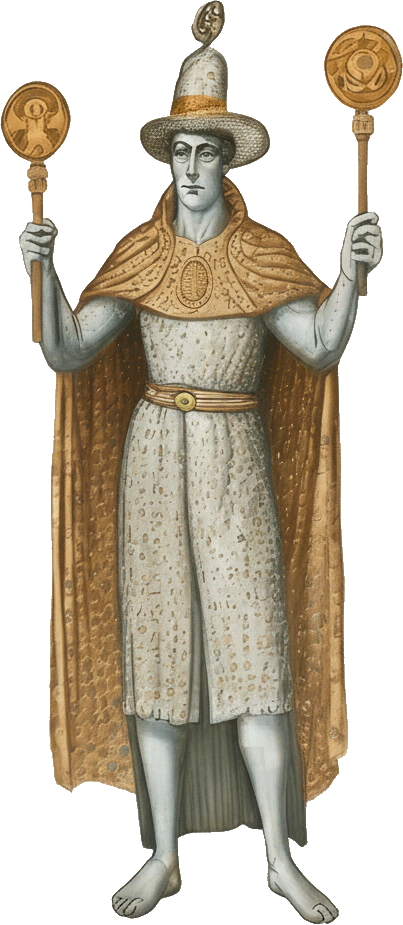
The Jungulus Amator deck is an oracular tool. It was not created to predict the future, but to dialogue with your deep consciousness. Each card you draw is responding to you in that precise moment, in relation to the question you have asked or the situation you are experiencing.
The cards do not express absolute truths or eternal judgments. They are moving mirrors that reflect your inner world in the here and now. The same card, drawn at different moments, may speak to you in different ways, because your inner landscape changes—and with it, the message changes as well.
To use the deck in the most authentic way, shuffle the cards while formulating a clear question. It is not necessary to shuffle for a long time: what matters is the conscious gesture of choosing, even when choosing blindly. Dividing the deck into two halves and shuffling them separately can make the process more comfortable.
Speak your question out loud before drawing three cards. Speaking aloud helps to organize thought. Often we believe an idea is clear in our mind, only to discover—when expressing it in front of someone—that it was not as clear as we thought.
Remember: the cards respond best when your intention is sincere and precise. Even a simple question such as “What do I need to see today?” is enough, if it comes from the heart. Keep in mind that each card is a temporary response. The cards you draw speak of this moment—the moment in which thought, voice, and gesture align, making each reading unique and unrepeatable.
Draw the cards and read them in the sequence in which you obtained them. If three cards do not clarify the answer, add three more. The explanations in this manual are not meant to close meaning, but to open doors. Each symbol also lives within you: allow your intuition to complete what you read.
HOW TO INTERPRET THE CARDS
STEP ONE
First of all, look at the image. Then, let its name come to you. Everything begins there. The image is the true portal to the subconscious: it acts silently, even before words can define a meaning. The name of the image, on the other hand, is its quintessence—the magical formula that evokes in us thoughts and concepts we have learned throughout life to associate with a particular figure.
Within this first combination, the seed of the answer may already be hidden.
Take, for example, the Mother card. First and foremost, it means mother. And this, by itself, is an open portal to your world: to your mother, to your being a mother (if you are one), to your relationship with motherhood, and to the emotions, words, and memories that this archetype awakens.
Begin to seek your answer within this emotional cauldron that the name “Mother” stirs inside you. Let the image and the word guide you, even before you can formulate a rational thought.
STEP TWO
Next, observe the four words placed at the sides of the card: two words of Light on the left, and two words of Shadow on the right. These words reveal sub-meanings of the archetype, nuances of the Mother that you may not have considered. Each word is an entity in itself, living from its own force; it should not be read as a mere accessory to the word “Mother,” but as a beacon that can lead you to the answer you seek. Let your instinct guide you toward the word that strikes you most deeply.
In the case of the Mother card, the four words are: BIRTH – PROTECTION – REJECTION – PAIN.
You may not have thought of these associations. The thought of the mother can evoke tenderness, affection, care. But pain is inscribed in birth, which is the gift and prerogative of the mother. Rejection is the reverse of protection, the cruel crossroads inherent in motherhood: to accept or not accept life? To care for children or let them go? To accept them as they are or try to change them?
Millions of women throughout the centuries have found themselves suspended on these same threads of tension, and have charged the Mother archetype with these implicit meanings. That is why the deck presents you with these four words: as suggestions, as keys to be interpreted in the light of your question, to open doors that conscious thought may not yet have touched.
STEP THREE
Final step: if doubt persists, deepen your exploration of the image through specific questions—tools that can guide your reasoning. This step is not mandatory, but it often reveals hidden keys that a mere glance cannot bring to light.
For this phase, the deck alone is no longer sufficient: it is necessary to consult the online guide or the book. Identical content, two different forms: you can choose to read on the screen or within the printed pages. The online guide is free; the book is a valuable companion, but paid.
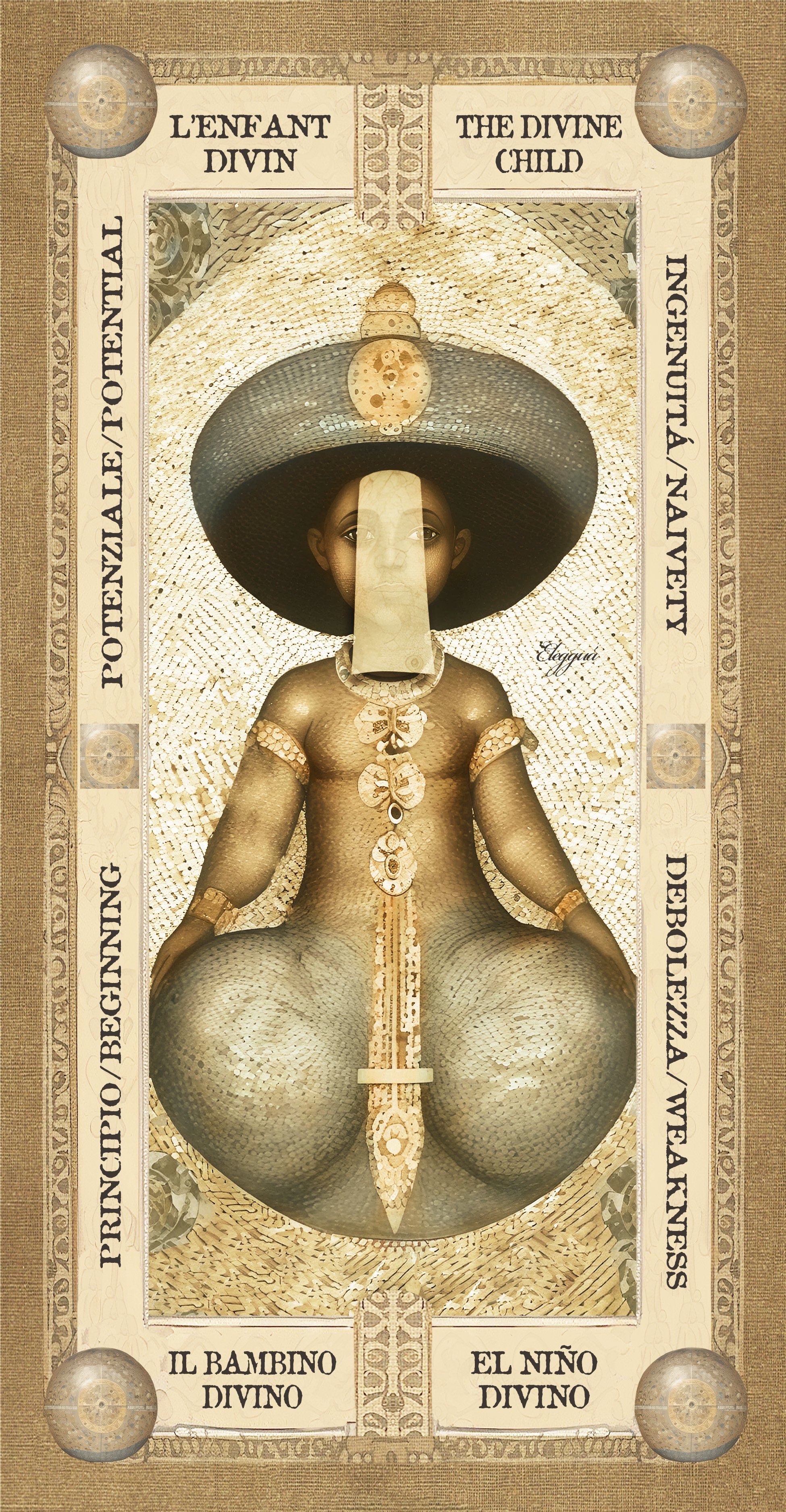
Let’s make a practical example.
Imagine that you ask the deck this question:
“How will tomorrow’s job interview go?”
Before interpreting the card, it is useful to pause for a moment on an important point. Many people approach oracles with the idea that they can predict the future. This is understandable, but it is also delicate ground. True foresight requires particular conditions: deep sensitivity, a natural predisposition, states of consciousness that cannot be learned by reading a manual.
The future, in truth, is not something fixed to be discovered. It is a field in constant motion, changing according to your choices, your inner state, the clarity or confusion you carry with you in that moment.
A good oracle does not say what will happen. Rather, it shows which energies you are activating now and which possibilities you are already nurturing within yourself. This is why, even when you ask a concrete question, the answer comes in the form of a symbol, speaking first and foremost to your inner state.
Let us suppose that the card drawn is The Divine Child.
Light aspects: BEGINNING – POTENTIAL
Shadow aspects: NAIVETY – WEAKNESS
How should this answer be read?
Each card can be read along two main directions. It may speak about you, pointing to an inner aspect that is active at that moment, or it may speak about the world around you, indicating a dynamic present in your environment, relationships, or the situation you are experiencing.
Each of these directions can manifest in two different modes. There is the light aspect, when the archetype expresses itself in a harmonious, fertile, or empowering way, and there is the shadow aspect, when it emerges in a disturbed, wounded, or limiting form.
Each card can therefore offer up to four possible interpretive keys: it may speak of you in light, of you in shadow, of the world in light, or of the world in shadow.
It will be your intuition that guides you toward the most appropriate reading in that moment. There is no need to choose rigidly: sometimes a single perspective is enough, at other times you may feel the need to explore them all. The questions that accompany each section of the guide exist precisely for this reason—not to provide predefined answers, but to help you enter into direct contact with the symbol, so that your own response may emerge.
If the light aspect resonates with you and you choose BEGINNING, the card suggests that you are at the start of something. The interview may represent the opening of a new cycle, still fragile, but real. It is not essential to know immediately how it will go. Something has already been born, and birth is always a delicate and meaningful passage.
If, still in light, you feel closer to POTENTIAL, The Divine Child invites you to recognize a force that may not yet be visible. There is within you a possibility not fully expressed, something that needs time to take shape. The interview may be a space in which this potential begins to emerge into the world.
If, instead, the shadow aspect strikes you and you choose NAIVETY, the card may point to a vulnerability. Perhaps you are approaching the encounter with too much trust, or without a clear vision of what you truly want. You may risk presenting yourself incompletely, or relying too heavily on others’ expectations.
If, in shadow, WEAKNESS emerges, the card reflects a sense of inner fragility. Perhaps you feel exposed, insecure, or afraid of not being up to the task. This is not a negative omen, but an invitation to protect what is still tender within you and to recognize where greater support is needed.
This is how the cards of Jungulus Amator speak: through living symbols that adapt to the question and to the state of the one who consults them, returning not a definitive answer, but the freedom to choose which direction to nourish.
FINAL CONSIDERATIONS
There is no single or definitive interpretive technique for reading the cards of Jungulus Amator. Each reader, especially with time and experience, naturally develops a personal style of their own. Nothing prevents the deck from being used with more elaborate spreads, composed of nine cards or more, just as it also works perfectly in a brief, single-card reading. For this kind of essential consultation, however, simpler and more direct decks—such as the Tarot of the Orishas—are often more suitable.
I will not explain to the reader how to read the cards, because I do not believe there is a true “how.” There are traditions, conventions, and established practices, but those who approach Jungulus Amator will approach it best with an open mind and a spirit of exploration.
Remember only this: in a brief reading, each card responds to a precise question, and there are no correct or incorrect interpretations. In more complex readings, on the other hand, the cards should be understood as frames in a sequence. Together, they construct a narrative that responds in a more articulated way to the question asked, exploring the querent’s present and past and, with sensitivity and intuition, also opening possible hypotheses for the future.
In these cases, the reading often takes the form of an inner story. Rather than offering a clear-cut answer, the cards work together to probe deeply into the psyche, like a story that gradually reveals itself through successive images.
Now you are here, truly ready to begin. Before you, the deck opens—and with it, a space where images speak before words, where each card is a door and each door an invitation. Let your gaze and your heart guide the way: the journey is about to begin.
Settantadue volti,
una sola canzone
che canta il silenzio
di ogni emozione.
Chi entra nel gioco
si lascia cambiare.
Chi pesca una carta
si lascia guidare.